Hightail Ranch — Grass-Fed Bison from Camas Prairie, Montana

Hightail Ranch sits on 10,000 acres of Camas Prairie in Western Montana. Around 300 bison roam the land. That's roughly 33 acres per animal, in a category where conventional cattle stocking is closer to one or two acres per head. When Hightail says free-roaming, the math backs it up.

Jon Sepp and Brittany Masters built the operation from scratch. Jon spent his career in the military, testing parachutes. Brittany came from a corporate role in Seattle, focused on food quality. Neither came from ranching families. Both are first-generation. They're veteran-owned and woman-owned, and they raise their herd with what they call low-stress handling, no interference outside of pasture moves and one annual run through the corrals to tag and health-check the animals.

Their bison eat grass year-round. No grain, ever. No hormones, no antibiotics, no vaccines. The herd grazes rotationally across the prairie, regenerating the soil as they move. The way bison have shaped this continent for thousands of years. Hightail is certified by the American Grassfed Association.

Hightail's view, which is also ours: bison aren't just livestock. The way they graze and the way their hooves work the soil are part of what built the Great Plains in the first place. Without them, the ecosystem doesn't exist. Raising them well isn't sentimental, it's how the land gets restored, generation by generation.

That's the work we want on Valor. We don't put a ranch on the marketplace unless we'd buy from them ourselves. Hightail clears that bar by a wide margin, and the moment you taste the first cut, you'll see why.

10,000 acres

Camas Prairie, Western Montana

Around 300 head

~33 acres per animal

Grass-fed AND Grass-finished

No grain, ever

No hormones. No antibiotics. No vaccines.

A stronger claim than most bison ranches make.

AGA-certified

American Grassfed Association & independently verified

Veteran- and woman-owned

First-generation ranchers, built from scratch.

Bison built this continent

Before there were cattle on the Great Plains, there were tens of millions of bison. They were nearly hunted to extinction in the 1800s — fewer than 1,000 animals left by 1900. The herds that survived were the ones that survived because people decided they should. Hightail's herd is part of that recovery.

The reason bison still matter, beyond the history, is the land. Bison graze differently than cattle. Their hooves break up compacted soil. Their grazing patterns rotate naturally across grassland, never picking it bare in one spot. Their dung returns nutrients that cattle dung doesn't. The Great Plains evolved around bison, and the prairie ecosystem genuinely doesn't work without them.

Raising bison well, the way Hightail does it, is one of the few things you can do as a meat producer that makes the land better than you found it. That's not a marketing claim — that's the actual ecology of how bison interact with prairie.

5 products
Sort by:
Featured
Bison Tomahawk — French-Cut, Bone-In | Hightail Ranch
Sold out
Two raw bison tomahawk steaks on a wooden surface with salt and pepper.
Person holding a tray with reverse seared bison tomahawk steaks.
Quick View

Bison Tomahawk — French-Cut, Bone-In | Hightail Ranch

Price
From $127.50
Bison NY Strip Steak — 10-12 oz | Hightail Ranch
Sold out
Raw bison NY strip steak on brown paper with a small bowl of seasoning and garlic bulb.
Bison NY Strip Steak with onions, sweet potatoes, and purple cabbage on a white plate.
Quick View

Bison NY Strip Steak — 10-12 oz | Hightail Ranch

Price
$67.99
Bison Osso Bucco — Bone-In Shank, 16-18 oz | Hightail Ranch
Sold out
Plated dish of bison osso buco with carrots and mashed potatoes on a wooden table.
bison osso buco raw on a wooden cutting board with herbs and salt in the background
Quick View

Bison Osso Bucco — Bone-In Shank, 16-18 oz | Hightail Ranch

Price
$59.51
Bison Tenderloin Filet — 4 oz | Hightail Ranch
Sold out
Sliced bison tenderloin filet steak with a carrot and rosemary on a white plate, placed on a wooden surface.
Raw bison filet steak with herbs and spices on a brown surface
Quick View

Bison Tenderloin Filet — 4 oz | Hightail Ranch

Price
$37.39
Grass-Fed Ground Bison — 1 lb Brick | Hightail Ranch
Sold out
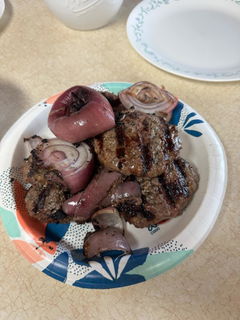
Grilled bison burger on a plate with radishes and purple cabbage on a wooden surface
Two raw bison burger patties on brown paper with a small bowl of spices and a clove of garlic.
Quick View

Grass-Fed Ground Bison — 1 lb Brick | Hightail Ranch

Price
$28.05

How to cook Hightail bison

Raw bison NY strip steak on brown paper with a small bowl of seasoning and garlic bulb.

The Bison Rule

Bison cooks ~30% faster than beef. Pull 5–10°F earlier than you would for beef. Get the doneness chart, it works across every cut.
Two raw bison tomahawk steaks on a wooden surface with salt and pepper.

Reverse-Sear the Tomahawk

The right method for a tomahawk of any size. Cook low, finish hot. Pull at 118–120°F for medium-rare. Size-by-size cook times included.
Plated dish of bison osso buco with carrots and mashed potatoes on a wooden table.

Braise the Osso Bucco

The classic Italian braise, adapted for bison. Three hours, mostly hands-off. Full ingredient list and stage-by-stage method.

Frequently asked questions

The most common questions about Hightail Ranch, how they raise their bison, and what makes the partnership work for Valor.

Where is Hightail Ranch located?

Camas Prairie, in Western Montana — a 10,000-acre operation. The ranch was originally established in Hot Springs, Montana, but the herd was relocated to Camas Prairie as the operation grew and needed more land. The current operation is in Camas Prairie.

Who owns Hightail Ranch?

Jon Sepp and Brittany Masters founded Hightail and run the operation. Jon spent his military career testing parachutes; Brittany came from a corporate role in Seattle. Neither came from ranching families — they're first-generation ranchers who built Hightail from scratch. Hightail is veteran-owned and woman-owned.

Is Hightail bison grass-fed and grass-finished?

Yes — both. Hightail's bison are 100% grass-fed and grass-finished. They eat no grain of any kind. They're raised without added hormones, without antibiotics, and without vaccines. Hightail is certified by the American Grassfed Association (AGA), the standard we look for when evaluating any grass-fed claim.

What does "low-stress handling" mean?

It's Hightail's term for how they raise their herd. Outside of seasonal pasture moves for rotational grazing and one annual run through the corrals to tag and health-check the animals, the herd is left alone. No daily handling, no confinement, no routine interventions. The bison live as much like wild bison as a managed herd can. It's better for the animals, better for the meat, and the simplest explanation of why Hightail's product tastes the way it does.

How is Hightail bison different from beef?

Bison runs leaner than beef, with a deeper, slightly more mineral flavor. It cooks faster — about 30% faster across most cuts — and has a tighter margin for overcooking, especially past medium. Nutritionally, bison delivers more protein per ounce than beef and less fat. Members who like their steaks medium-rare and care about a clean finish almost always prefer bison once they've tried it cooked correctly.

How is Hightail bison different from other DTC bison brands?

Three things, mostly. First, Hightail is a single ranch — every cut comes from one herd in one place, raised by the same family. Many bison brands aggregate from multiple farms or finish on grain; Hightail doesn't. Second, the no-vaccines claim is stronger than most premium bison brands make. Third, the AGA certification is independent verification — anyone can claim grass-fed, but AGA certified means the claim has been audited. For us, that's the standard.

When does Hightail restock?

Hightail harvests in batches, not on a continuous schedule. The 24–28 oz and 32–40 oz tomahawks, the ground bison, the NY strip, the filet, and the osso bucco are stocked regularly — typically available year-round with occasional gaps between harvests. The 48–55 oz trophy tomahawk is limited to five per harvest and sells out within days when it drops. Join the back-in-stock list on any product page for restock notifications.

How does Hightail bison ship?

Frozen, in insulated coolers with dry ice. 1–3 day handling and 1–3 day transit nationwide. Shipping is calculated at checkout and you'll see the cost before you confirm. Larger orders may ship in multiple coolers.

Why is the bison filet only 4 oz?

Because the petite size is the feature. A 4 oz filet cooks more evenly than an 8 oz one — at petite size the pan sear finishes the cook completely without needing the oven, which means better edge-to-center doneness. The smaller portion also makes the filet work as a pairing or as part of a plate rather than the entire centerpiece. And the lower price point makes the most premium cut of bison accessible — it stops being a once-a-year cut and starts being a Tuesday-night option. Order two for a serious filet dinner, one to pair with another protein.

How does Valor work with Hightail?

Hightail is a partner ranch on the Valor marketplace. The ranch raises and harvests the bison; Valor handles the marketplace, the membership economics, the customer relationship, and the editorial work that helps cooks get the most out of every cut. We don't put a ranch on Valor unless we'd buy from them ourselves. Hightail cleared that bar by a wide margin — and the partnership is built on the standard staying that way.